Introduction
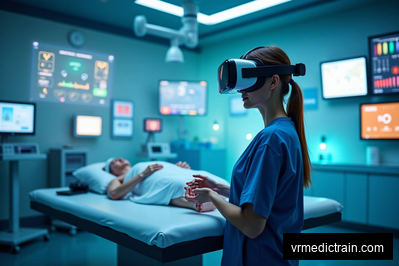
The world of emergency medical response is a high-stakes environment where precision, speed, and apt decision-making can mean the difference between life and death. Traditional training methodologies, while effective, often expose trainees to a limited number of scenarios. This is where Virtual Reality (VR) comes into play, promising a revolution in emergency medical response training by providing an immersive, interactive, and realistic environment.
This advancement is not just theoretical. According to a report by Goldman Sachs, the VR market in healthcare is expected to reach $5.1 billion by 2025, emphasizing the growing recognition of its potential. This blog post delves into the role of VR in enhancing emergency medical response skills, providing real-world examples, expert insights, and practical implications of this cutting-edge technology.
In this Introduction section, we delve deeper into the critical role of effective communication in emergency medical response. Clear and concise communication is paramount in swiftly coordinating resources and providing timely assistance to those in need. For instance, EMS professionals rely on radio codes and terminology to convey vital information efficiently during high-pressure situations. Furthermore, effective communication extends beyond verbal exchanges to include non-verbal cues and active listening skills, ensuring seamless coordination among team members.
Understanding the importance of situational awareness is another key aspect highlighted in this Introduction. EMS providers must assess the scene quickly, taking into account potential hazards, patient conditions, and available resources to make informed decisions. For example, recognizing the signs of a cardiac emergency versus a respiratory distress situation can significantly impact treatment outcomes. By emphasizing situational awareness early on, emergency responders can enhance their ability to adapt and respond effectively in dynamic and challenging environments.
Immersive Training and Skill Acquisition
VR provides an immersive platform for emergency responders to practice critical procedures and decision-making skills in a safe, controlled environment. For instance, Oxford Medical Simulation, a VR application, allows medical professionals to manage a variety of complex situations, such as diabetic emergencies or heart attacks. The software records performance for later review, facilitating reflective learning.
A study by the University of Maryland demonstrated that VR can lead to a 8.8% improvement in recall ability compared to traditional desktop learning. The immersive nature of VR can result in more effective learning and better knowledge retention, which are crucial in the fast-paced field of emergency medical response.
In addition to emergency response training, immersive technology has revolutionized the field of aviation simulation. Pilots can now engage in hyper-realistic scenarios that mimic various weather conditions and mechanical failures, enhancing their ability to handle in-flight emergencies with precision and confidence. These simulations not only sharpen technical skills but also cultivate decision-making under pressure, a crucial aspect of pilot training.
Moreover, immersive training extends beyond traditional industries, with sectors like healthcare leveraging VR for surgical simulations. Medical professionals can practice complex procedures in a risk-free environment, honing their motor skills and enhancing their spatial awareness. This innovative approach to skill acquisition not only improves patient outcomes but also boosts the confidence of healthcare practitioners, paving the way for a new era of immersive learning in the medical field.
Elevating Teamwork and Communication
Emergency medical response often requires seamless teamwork and communication. VR can provide realistic multi-user scenarios where teams can practice coordination and communication skills. For instance, the Royal London Hospital uses VR to simulate trauma scenarios, allowing teams to develop their communication skills and understand their roles during emergencies.
Moreover, a study by the Journal of Surgical Education found that VR training improved surgical team cooperation by 23%. This highlights the potential of VR in fostering effective teamwork and communication in emergency medical response situations.
In high-stress environments like emergency response, effective teamwork and communication are paramount. Harnessing innovative tools like virtual reality (VR) simulations can offer a unique training experience for healthcare professionals. By immersing team members in realistic scenarios, VR can enhance their ability to cooperate seamlessly and communicate efficiently during critical situations. For example, simulating a mass casualty incident in VR can help teams practice coordinating their efforts, assigning roles, and exchanging vital information under pressure. This interactive training not only elevates teamwork skills but also fosters clearer communication channels, leading to improved patient outcomes in real-life emergencies.
Addressing Challenges and Limitations
While VR holds promising potential, it is not without its challenges. High costs of VR equipment and development of realistic simulations can be a deterrent. Additionally, the technology may pose physical side effects such as dizziness or nausea, known as 'cybersickness'.
Despite these challenges, the potential benefits of VR in emergency medical response training are compelling. As Dr. Rafael Grossmann, a healthcare futurist, explains, "The power of VR to provide high-quality, repeatable, and scalable training scenarios is an invaluable resource in the medical field."
Furthermore, addressing challenges and limitations in VR technology also involves tackling issues related to user discomfort. Motion sickness and eye strain are common complaints among VR users, hindering prolonged usage and immersive experiences. Developers are continuously working on optimizing display resolutions and reducing latency to alleviate such discomforts. Implementing ergonomic designs and intuitive user interfaces are also crucial in enhancing user comfort and minimizing physical strain during extended VR sessions.
Conclusion
Bridging the gap between theory and practice is a perennial challenge in emergency medical response training. With its immersive and interactive capabilities, VR is poised to revolutionize this process. By providing safe, repeatable, and realistic training scenarios, it can enhance skill acquisition, foster teamwork, and ultimately improve patient outcomes.
As we look towards the future, it is crucial for healthcare institutions to embrace this technology and invest in VR-based training programs. By doing so, they can equip their emergency medical personnel with the skills and confidence to handle real-world emergencies effectively, ultimately saving more lives.
In the realm of emergency medical response training, the conclusion serves as a pivotal moment where theoretical knowledge meets practical application. It is at this juncture that trainees have the opportunity to demonstrate their understanding of protocols and procedures in real-life scenarios. For instance, simulating a mass casualty incident can provide a comprehensive test of their abilities to prioritize patient care, coordinate with other responders, and make critical decisions under pressure.
Moreover, the conclusion of training modules often includes debrief sessions that offer valuable insights for continuous improvement. These discussions allow participants to reflect on their performance, identify strengths and areas for growth, and collectively brainstorm strategies to enhance overall response effectiveness. Embracing the conclusion as a learning opportunity can significantly enhance the bridge between theory and practice in emergency medical response training.