Introduction
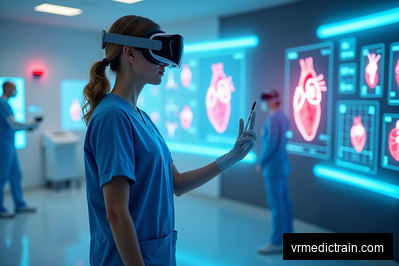
The healthcare sector is forever evolving, continuously seeking to improve patient care and treatment. One of the recent advancements is the incorporation of Virtual Reality (VR) in patient interaction training. This cutting-edge technology provides an immersive, interactive experience that simulates real-world scenarios, thereby offering healthcare professionals a safe and controlled environment to hone their skills.
Virtual Reality's application in healthcare is not a new concept. Starting from its initial usage in phobia treatment during the 1990s, VR has now branched out into various medical applications, including patient interaction training. But how exactly has VR evolved in this field? Let's delve into the transformative journey of VR in patient interaction training.
In our discussion of the Introduction to the dynamic healthcare sector, it's crucial to highlight the pivotal role of technological advancements in shaping the landscape of patient care. For instance, the integration of electronic health records (EHR) has revolutionized how medical professionals access and manage patient information, enhancing the efficiency and accuracy of healthcare delivery. Additionally, the rise of telemedicine services has opened up new avenues for remote consultations and monitoring, providing patients with convenient and accessible care options.
Furthermore, the Introduction section sets the stage for exploring the ongoing challenges and opportunities within the healthcare industry. From addressing disparities in healthcare access to navigating complex regulatory frameworks, healthcare professionals are continuously adapting to meet the evolving needs of patients and communities. By delving into these key themes, readers can gain a deeper understanding of the multifaceted nature of modern healthcare and the innovative strategies being implemented to drive positive change and improve patient outcomes.
The Early Stages of Virtual Reality in Healthcare
The initial use of VR in healthcare was primarily focused on treating phobias and post-traumatic stress disorder. In the late 1990s, a study by Dr. Barbara Rothbaum demonstrated that VR could effectively treat acrophobia (fear of heights). Patients were exposed to a virtual environment that simulated heights, helping them gradually overcome their fear.
Soon, the potential of VR to provide a realistic, immersive experience was recognized. This led to the incorporation of VR into surgical training during the early 2000s. For instance, the Stanford University School of Medicine introduced a virtual surgical simulator to train their students. This marked a significant milestone in the usage of VR in healthcare, paving the way for its application in patient interaction training.
As we delve deeper into the early stages of virtual reality in healthcare, we begin to uncover the profound impact it has had on medical training. In the past, training medical professionals often involved simulation labs and mannequins, but VR technology is revolutionizing this norm. Now, aspiring surgeons can practice intricate procedures in a realistic virtual environment, honing their skills with precision and without the need for expensive equipment.
Furthermore, virtual reality is creating new possibilities in patient care. Healthcare providers are exploring the use of VR to alleviate pain during medical procedures, such as dressing changes for burn victims or dental treatments for children. By immersing patients in calming virtual environments, the perception of pain can be significantly reduced, offering a more comfortable experience. These innovative applications mark just the beginning of how virtual reality is reshaping the landscape of healthcare delivery in its early stages.
Advent of Virtual Reality in Patient Interaction Training
The concept of VR in patient interaction training emerged around the mid-2000s. The initial VR systems, such as Virtual Patient by USC Institute for Creative Technologies, were utilized to train medical students to interact with patients. These systems presented different patient scenarios and assessed the students based on their interaction, communication, and decision-making skills.
Moreover, VR provided an effective solution to the challenge of teaching empathy to healthcare professionals. For instance, Embodied Labs developed a VR program that allows healthcare providers to experience the world from a patient's perspective, fostering empathy and understanding. This marked a significant advancement in patient interaction training, emphasizing the emotional aspect of patient care.
The advent of virtual reality (VR) has revolutionized patient interaction training by offering immersive simulations that replicate real-life scenarios with unprecedented realism. This technology allows medical professionals to practice communication, empathy, and critical decision-making in a safe and controlled environment. For instance, VR programs now simulate challenging patient interactions, such as delivering difficult news or managing emotional distress, enabling healthcare providers to enhance their skills in a risk-free setting. Moreover, VR-based training can also improve healthcare outcomes by fostering a deeper understanding of patient perspectives and cultural sensitivity, ultimately leading to more effective patient care. By harnessing the power of VR in patient interaction training, healthcare institutions can elevate the quality of their services and better prepare their staff to handle a wide range of complex scenarios with confidence and competence.
Modern-Day Applications of Virtual Reality
Today, VR's application in patient interaction training has expanded exponentially. It is now used to train various healthcare professionals, including doctors, nurses, and therapists. For instance, a study conducted by the University of Michigan found that VR training improved the communication skills of doctors and nurses in pediatric emergencies.
VR is also employed to simulate complex patient scenarios that are difficult to replicate in a traditional training environment. For instance, Oxford Medical Simulation developed a VR system that allows healthcare professionals to interact with virtual patients having complex conditions such as diabetic ketoacidosis, providing them with a practical, hands-on experience.
Additionally, virtual reality has revolutionized the field of architecture and design. Architects now harness VR technology to create immersive 3D models of buildings, offering clients the chance to virtually walk through their future spaces before construction even begins. This not only enhances the client's understanding of the project but also allows architects to make real-time adjustments based on the client's feedback, leading to more precise and satisfactory outcomes. VR has truly opened up a new dimension in architectural visualization and client collaboration.
The Future of Virtual Reality in Patient Interaction Training
The future of VR in patient interaction training seems promising. With advancements in technology, VR systems are expected to become more realistic and interactive. Future VR systems might incorporate elements of Augmented Reality (AR) and Mixed Reality (MR), providing a more comprehensive training experience.
Moreover, with the advent of artificial intelligence (AI), future VR systems could offer personalized training experiences. They could adjust the simulation based on the user's performance, providing them with customized feedback and recommendations. This would further enhance the effectiveness of patient interaction training, ensuring that healthcare professionals are well-equipped to meet the diverse needs of patients.
As we delve deeper into the realm of virtual reality (VR) in patient interaction training, one can't help but anticipate the transformative impact it will have on medical education. Imagine a scenario where medical students can immerse themselves in hyper-realistic simulations, interacting with virtual patients exhibiting a wide range of conditions and responses. This level of experiential learning not only enhances clinical skills but also fosters empathy and communication abilities crucial for effective patient care.
Furthermore, the potential for personalized training experiences is staggering. With VR, educators can tailor scenarios to suit individual learning needs, offering a dynamic and adaptive training environment. By incorporating artificial intelligence and biofeedback mechanisms, VR simulations can provide real-time performance evaluations, guiding learners to improve their patient interaction skills efficiently. The future holds endless possibilities for VR in patient interaction training, promising a revolution in medical education that prioritizes practical, hands-on learning experiences.
Conclusion
The evolution of patient interaction training through VR is a testament to the transformative power of technology in healthcare. From its initial stages of treating phobias to its modern-day applications in patient interaction training, VR has significantly revolutionized healthcare. By providing healthcare professionals with a safe, controlled, and immersive training environment, VR has enhanced the quality of patient care.
As technology continues to advance, the application of VR in patient interaction training is expected to further evolve, promising a brighter future for healthcare. To stay ahead of the curve, healthcare institutions must embrace this technology, investing in VR systems for patient interaction training. This would not only improve the skills of healthcare professionals but would also lead to better patient outcomes.
In conclusion, the impact of VR technology on patient interaction training is truly groundbreaking. As we delve deeper into the realm of virtual reality, we witness a shift in how healthcare professionals are honing their skills. For instance, the use of VR simulations allows medical students to practice difficult conversations with patients in a safe and controlled environment, preparing them for real-life scenarios with confidence and empathy.
Furthermore, the ability to tailor VR experiences to specific patient demographics opens up a world of possibilities in personalized care. Imagine a virtual training module designed to simulate interactions with elderly patients, focusing on communication techniques that resonate with this demographic. Through VR, healthcare professionals can enhance their cultural competence and better cater to the diverse needs of patients, ultimately improving the overall quality of care provided. In essence, the future of patient interaction training through VR holds immense promise for revolutionizing healthcare education and practice.