Introduction
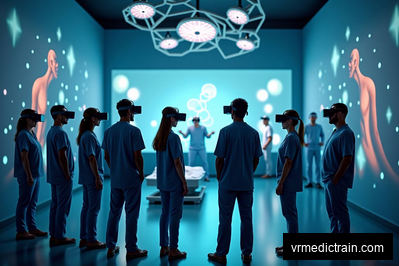
For medical professionals, confidence in one's abilities is more than just a comforting assurance; it’s a matter of life and death. Confidence can dictate the level of care and the ultimate outcome of a patient's treatment. However, the path to gaining this confidence is oftentimes paved with stress, burnout, and even traumatic experiences. This is where technological advancements like Virtual Reality (VR) training come into play. Through realistic, immersive simulations, VR training can help medical professionals gain confidence in a safe and controlled environment.
In recent years, VR has witnessed a significant surge in its application within the healthcare sector. Its ability to recreate real-life situations in a risk-free setting not only reduces the learning curve for medical professionals but also boosts their self-assurance. This article will delve into the psychological benefits of VR training, touching on specific examples, statistics, and industry insights.
In the realm of medical practice, the introduction sets the tone for the entire patient encounter. It serves as the initial point of connection between healthcare providers and patients, paving the way for trust and effective communication. A well-crafted introduction not only establishes a sense of professionalism but also conveys empathy and understanding to those seeking medical care. For instance, a warm greeting accompanied by a genuine smile can instantly put patients at ease, making them more receptive to the forthcoming medical advice and treatment options. Additionally, an introduction that includes asking about a patient's preferences or concerns demonstrates a patient-centered approach that empowers individuals to actively participate in their healthcare decisions.
The Rise of VR in Medical Training
VR has been making inroads into medical education and training, providing a realistic, immersive environment for students and professionals alike. The technology assists in honing skills such as surgical precision, diagnostic acumen, and emergency response. A study by the University of Maryland found that VR training improved participants' recall by 8.8 percent compared to traditional teaching methods.
Take for example, the case of Osso VR, a surgical training platform that offers hands-on training through immersive VR. Their studies showed that surgeons trained via VR were 230% faster and made 38% fewer errors than their traditionally trained counterparts. Another example is the application of VR in psychiatric training, where trainees can face simulated patients with a variety of conditions, enhancing their diagnostic and therapeutic skills.
One fascinating aspect of the rise of VR in medical training is its ability to simulate complex surgical procedures in a controlled environment. Imagine a medical student being able to practice delicate surgeries repeatedly without any risk to real-life patients. This technology not only enhances the learning experience but also boosts confidence and precision among future surgeons. Additionally, VR is being utilized to train healthcare professionals in emergency response scenarios, allowing them to practice critical decision-making under pressure.
Boosting Confidence and Reducing Anxiety
Beyond the purely technical benefits, VR training also has profound psychological implications. Confidence and anxiety often go hand-in-hand in medical practice, and VR training can work to enhance the former while mitigating the latter. The immersive nature of VR provides a safe environment for medical professionals to make mistakes, learn, and refine their skills without the fear of causing harm. This can significantly boost their confidence.
Research by the Stanford University School of Medicine found that medical students who underwent VR training reported higher confidence levels in performing surgeries. Moreover, a study published in the Journal of Medical Internet Research stated that VR-based exposure therapy could reduce anxiety levels by up to 67%. These statistics underline the potential of VR as a tool for boosting confidence and reducing anxiety among medical professionals.
In addition to the psychological benefits of VR training, incorporating mindfulness techniques can further enhance the process of boosting confidence and reducing anxiety. By integrating mindfulness practices such as deep breathing exercises or guided meditations into VR experiences, individuals can cultivate a greater sense of self-awareness and emotional regulation. This combination not only fosters a positive mindset but also equips users with practical tools to manage stress and anxiety in real-world scenarios.
Furthermore, personalized feedback mechanisms within VR simulations can play a crucial role in reinforcing positive behaviors and building self-confidence. For instance, receiving instant feedback on communication skills or public speaking performance in a virtual setting allows users to practice and improve without the fear of judgment. This iterative process of self-improvement not only boosts confidence levels but also helps individuals confront and overcome anxiety triggers in a safe and controlled environment.
Improving Empathy and Communication Skills
Another psychological benefit of VR training is its ability to enhance empathy and communication skills. VR can simulate patient interactions, helping medical professionals understand patient perspectives better. This encourages empathy, a crucial element in patient care. In a study by the University of Barcelona, VR-based empathy training resulted in increased empathic responses among healthcare professionals.
Moreover, VR can also improve communication skills, a critical aspect of patient interaction. Embodied Labs, a VR training provider, offers simulations that allow users to experience life from a patient's perspective. This unique approach improves the user's understanding and empathy, thus enhancing their communication with patients. The result is a more confident professional who can effectively communicate diagnoses and treatment plans to patients.
Building upon the foundation of enhancing empathy and communication skills through VR training, it is fascinating to explore the role of active listening in further honing these essential abilities. Active listening involves not just hearing the words spoken but also understanding the underlying emotions and intentions behind them. This skill cultivates a deeper level of empathy by allowing individuals to truly connect with others on a more meaningful level. By practicing active listening in simulated scenarios within virtual reality environments, individuals can sharpen their ability to comprehend non-verbal cues, such as facial expressions and body language, thus improving their overall communication skills.
Moreover, delving into the realm of emotional intelligence can significantly contribute to the enhancement of empathy and communication skills. Emotional intelligence encompasses self-awareness, self-regulation, empathy, social skills, and motivation, all of which are crucial components of effective communication. By integrating emotional intelligence training modules into VR programs, individuals can develop a heightened awareness of their own emotions and those of others, fostering a more empathetic and communicative approach in various interpersonal interactions. This comprehensive approach not only enriches personal relationships but also contributes to a more harmonious and productive work environment.
Challenges and Future Directions
Despite its immense potential, VR training is not without its challenges. There are substantial costs involved in developing and implementing VR technology. There may also be resistance from individuals who are not familiar with the technology. Furthermore, while VR can simulate many scenarios, it cannot fully replicate the tactile experience of treating a real patient.
Yet, the future looks promising. As technology advances, we can expect VR to become more refined, accessible, and affordable. The development of haptic technology, which simulates the sense of touch, can further enhance the realism of VR simulations. The ultimate goal is to create a seamless integration of VR training into the medical curriculum, providing a comprehensive, realistic, and psychologically beneficial training tool for future medical professionals.
Looking ahead, one key future direction for VR training lies in enhancing user comfort and reducing motion sickness. While the technology has advanced significantly, some users still experience discomfort during prolonged VR sessions. Addressing this challenge will require further research into developing more ergonomic and lightweight headsets, as well as refining motion tracking algorithms to minimize latency and improve overall user experience.
Another important challenge that the VR training industry faces is the need for standardized content creation tools and platforms. Currently, content development for VR training programs can be complex and time-consuming, limiting the scalability of such solutions. Future directions should focus on streamlining content creation processes through the development of user-friendly tools and platforms that enable educators and trainers to easily create, customize, and deploy immersive training modules across various industries.
Conclusion
In conclusion, virtual reality training holds immense promise for boosting the confidence of medical professionals. By providing a safe, controlled environment for practice, it reduces anxiety and enhances self-assuredness. It also fosters empathy and communication skills, leading to better patient care. While challenges exist, continual technological advances and increasing acceptance of VR suggest a bright future for this innovative training method.
For healthcare institutions considering VR training, it is essential to remember that success depends not only on the technology itself but also on its thoughtful implementation. While the journey towards widespread VR adoption in healthcare may be complex, the potential benefits for medical professionals and patients alike make it a worthwhile pursuit.
As we wrap up our discussion on virtual reality training in the medical field, it's important to highlight the potential impact it can have on patient outcomes. By enhancing the skills and confidence of medical professionals through realistic simulations, we are not only improving their individual performance but also potentially elevating the standard of care for patients. For instance, surgeons who undergo virtual reality training may exhibit greater precision and efficiency during procedures, ultimately leading to better surgical outcomes and reduced risks for patients.
Furthermore, the integration of virtual reality in medical education can revolutionize the way future healthcare providers are trained, ensuring that they are equipped with the necessary skills to navigate complex medical scenarios with confidence. In conclusion, the adoption of virtual reality training in healthcare has the potential to transform the industry by enhancing the quality of care provided to patients and empowering medical professionals to excel in their practice.